Working From Home Without Wrecking Your Body
The commute you lost was also the movement you lost — and the kitchen chair was never meant for eight hours. An ergonomics-guided repair kit for the home office.
(Image credit: Wellness Research Daily)
Remote work quietly removed most of the incidental movement a workday used to smuggle in — the walk to the station, the stairs, the trek to a far meeting room — and replaced the adjustable office chair with whatever the spare room had. What's left, for many, is a laptop, a kitchen chair, and a step count that would embarrass a housecat. The aches that follow aren't mysterious, and ergonomics research has clear opinions about the fixes.
The laptop problem
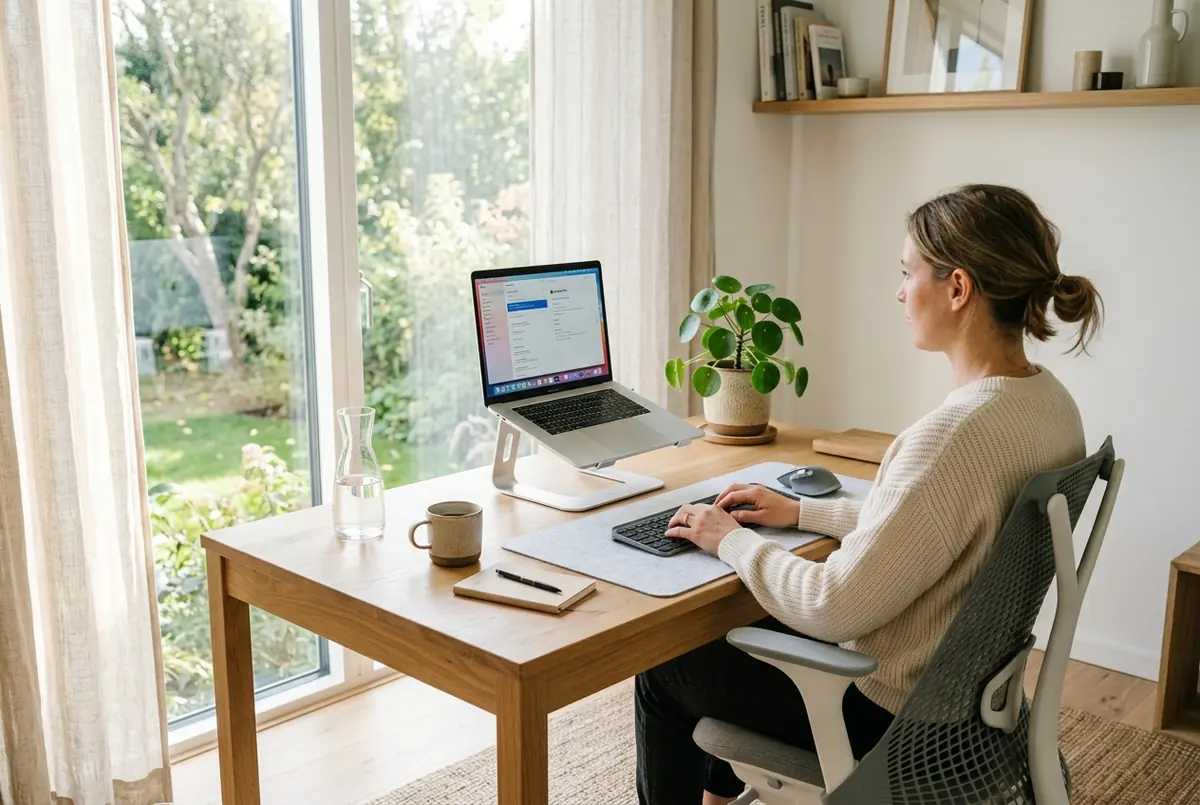
A laptop's design forces an anatomical compromise: screen at eye height or keyboard at hand height — never both. Standard ergonomic guidance wants the top of your screen at or slightly below eye level, about an arm's length away, with elbows near right angles and wrists neutral. A laptop on a table fails every clause at once, which is why the hunch develops.
The fix costs little and outperforms most furniture: a laptop stand (or a stack of sturdy books) to raise the screen, plus a separate keyboard and mouse. It's the single highest-value purchase in home ergonomics. Second priority: whatever chair you use, add lower-back support — a cushion works — and get feet resting flat or on a support. The expensive chair is optional; the geometry isn't.
Rebuild the fake commute
The old commute bookended the day with movement and a mental seam between work-mode and home-mode. Both mattered more than anyone realized. A deliberate ten-to-twenty-minute walk before and after the workday restores both at once — morning light for the body clock on one end, decompression and a hard stop on the other. People who do it are consistently smug about it, with cause: it's the cheapest structural fix in remote work.
Interrupt the marathon sits
Home has fewer natural interruptions than an office — no colleagues stopping by, no walk to meeting rooms, coffee ten steps away — and research on sedentary time is blunt about long unbroken sitting: it's an independent health stressor, and experiments show that breaking it up with brief light activity measurably improves the body's post-meal metabolic response. Home days routinely log the longest unbroken sits of the week, so manufacture the punctuation deliberately:
- Stand or pace for phone calls; walk during audio-only meetings
- Treat every hour's turn as a one-minute movement cue — kettle heel raises count
- Put the printer, the water, the charger in the wrong room on purpose
- End every video call with a lap of the home, in honor of the corridor walk it replaced
Defend the boundary
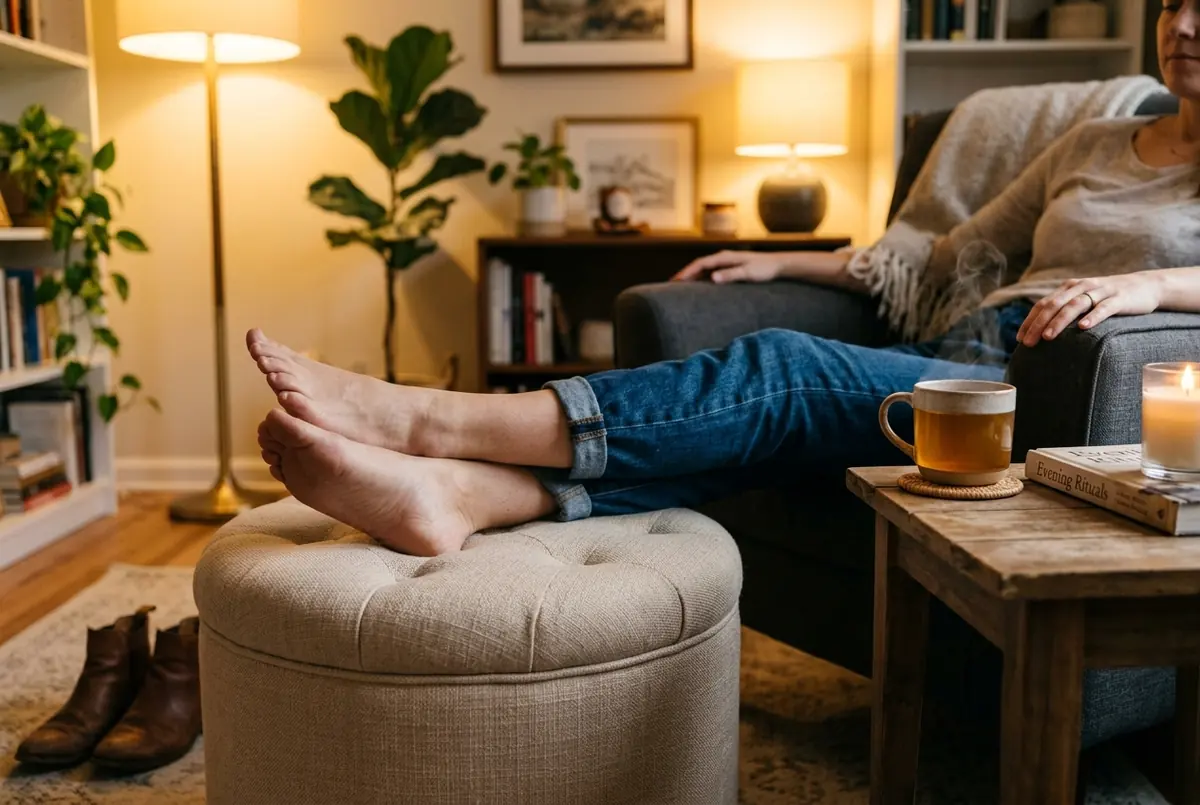
The sneakiest home-office injury isn't physical — it's the workday dissolving into the evening because the office is the sofa. Bodies and minds recover in the off-hours, and they need the hours to actually be off. A hard stop at a set time, the laptop closed and ideally out of sight, and if space allows, a work spot that isn't your relaxing spot: these draw the line the commute used to draw for free. The after-work walk doubles as the closing ceremony.
The honest summary
The home office can genuinely beat the cubicle — better light, better coffee, zero commute stress. It just needs two things designed back in that the office provided by accident: geometry (screen up, support behind, feet planted) and movement (bookend walks, hourly punctuation). Neither requires a renovation. Both require deciding once — and then the habit research's kindest finding applies: keep returning, and in a couple of months it runs itself.