
How Much Water Do You Actually Need? The Science Behind the Myth
Eight glasses is folklore. Gallon jugs are theater. A 2004 National Academies report answered the question — and almost nobody read it.
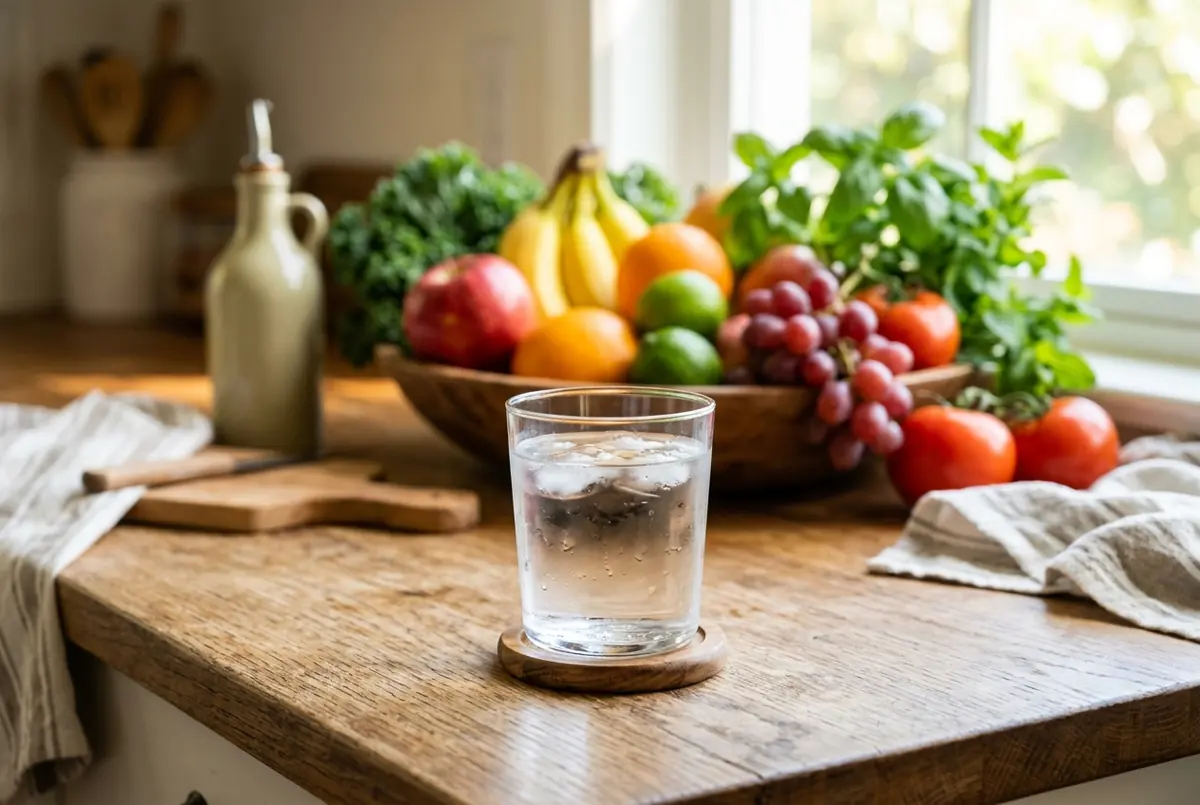
(Image credit: Wellness Research Daily)
Few health questions get asked more often or answered with more unearned confidence. The eight-glasses-a-day rule — 64 ounces, neat and memorable — has no firm scientific origin. It likely traces to a 1945 U.S. Food and Nutrition Board recommendation that adults consume roughly 2.5 liters of water daily, which already included water from food — a caveat the public forgot before the ink dried.
What the actual guidelines say
The closest thing to an authoritative answer comes from the National Academies of Sciences (then the Institute of Medicine), which published comprehensive Dietary Reference Intakes for water in February 2004. Their finding: women who appear to be adequately hydrated consume an average of approximately 2.7 liters (91 ounces) of total water per day — from all beverages and foods combined — while men average roughly 3.7 liters (125 ounces). About 80 percent comes from beverages; the remaining 20 percent arrives as food.
Two things jump out. First, these are observations of adequate hydration, not prescriptions — and they include all fluids, not just plain water. Second, the ranges are far wider than any single number can capture, because needs move with body size, activity level, climate, altitude, and diet. A construction worker in July and a data analyst in a climate-controlled office are running wildly different water budgets, and any fixed target will be wrong for most people in one direction or the other.
The signals that actually work
Your body already tracks hydration. Two indicators cover most situations for healthy adults: thirst, which the National Academies report explicitly endorses as a reliable prompt, and urine color — pale straw says you're fine; consistently dark suggests you're behind. Frequent afternoon headaches, unexplained sluggishness, and mistaking thirst for hunger are softer clues worth noticing.
The myths worth retiring
- "Coffee dehydrates you." Ordinary coffee and tea contribute net fluid; the mild diuretic effect doesn't cancel the water they contain. You don't need to "offset" your morning cup.
- "You can't drink too much." You can, though it's rare — hyponatremia (dangerously low sodium from drinking far more water than the body can excrete) is a genuine risk in extreme exercise or compulsive overconsumption. The gallon-a-day challenge is not medically endorsed.
- "Clear urine means optimal hydration." Consistently clear urine likely means you're overdrinking slightly. Pale straw is the target, not transparency.
When to be proactive
Thirst lags in a few real situations: hot weather, long or intense exercise, illness with fluid losses, air travel (cabin humidity runs around 10–20 percent), and later life, when the thirst signal genuinely dulls. On those days, drinking on a schedule rather than on demand is sensible. This is also where electrolytes enter the conversation for long sweaty efforts — but for a normal day at a desk, water is the whole answer.
The practical takeaway
Keep water within reach, drink when thirsty, glance at the color gauge occasionally, and front-load a glass in the morning after a night without fluids. That protocol outperforms both neglect and the gallon-jug arms race — and the National Academies said as much two decades ago.