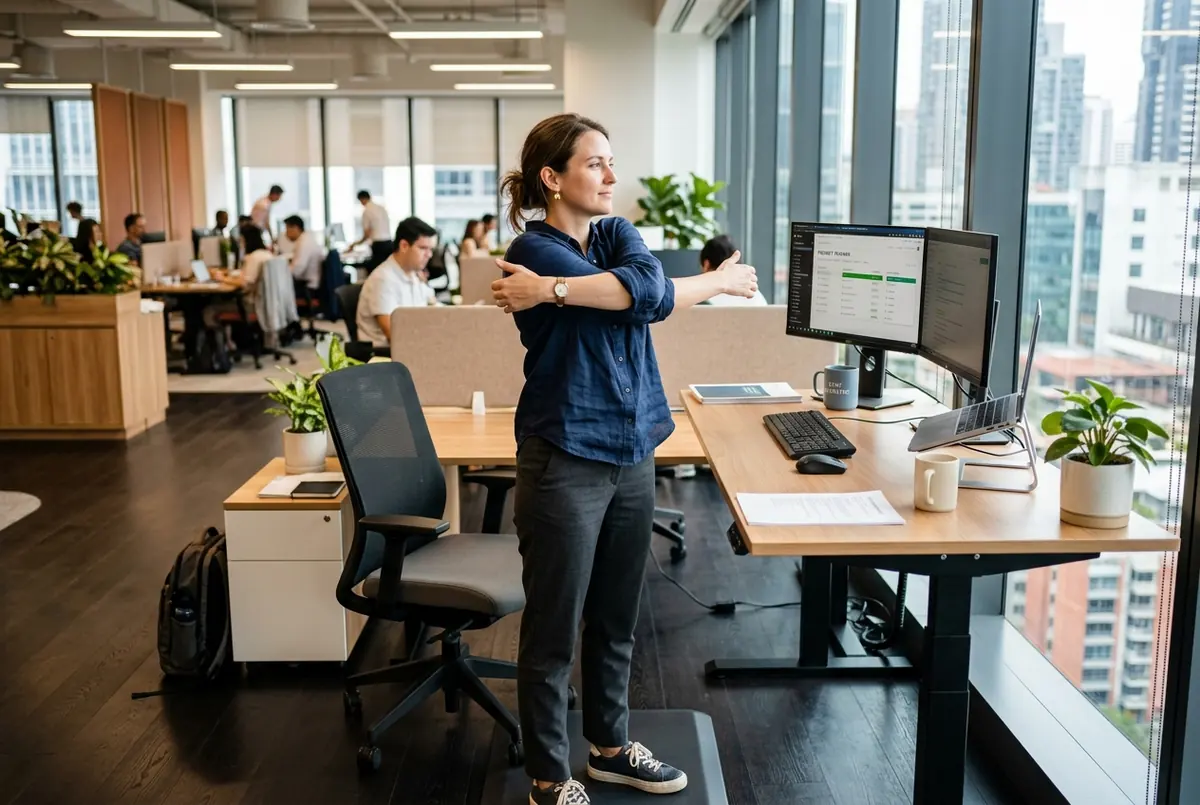
A Standing Desk Won't Save You — But Here's What Will
A meta-analysis measured the calorie difference between sitting and standing: it's about 9 extra calories per hour. The standing desk's real value is something else entirely.
(Image credit: Wellness Research Daily)
The sit-stand desk became the emblem of office wellness — the purchase that signals the problem has been handled. The research reception has been considerably more measured.
The calorie myth
A 2018 meta-analysis by Saeidifard and colleagues, pooling 46 studies and over 1,100 participants, quantified the difference: standing burns approximately 0.15 kcal/min more than sitting — roughly 9 extra calories per hour, or about 54 to 72 over an entire eight-hour workday. That's the caloric equivalent of a single carrot. Standing at your desk is not a meaningful weight-loss strategy; the marketing implied otherwise, and the data disagrees.
Standing still also introduces its own complaints when overdone: feet, knees, and lower backs all file grievances after extended static standing — the same pattern that occupational-health research documents in standing professions. A body holding any single position for hours is still a body holding a single position for hours, whether that position is sitting or standing.
The real value: position switching
The people who report the best results from sit-stand desks are the ones using the verb in the product name: alternating. Sitting for a stretch, standing for a stretch, moving between. The switch itself — changing load, changing posture, prompting micro-movements — is the active ingredient. The research on breaking up sitting supports exactly this: it's the unbroken stretch that drives the metabolic and musculoskeletal costs, and variety is what breaks it.
How to actually use one
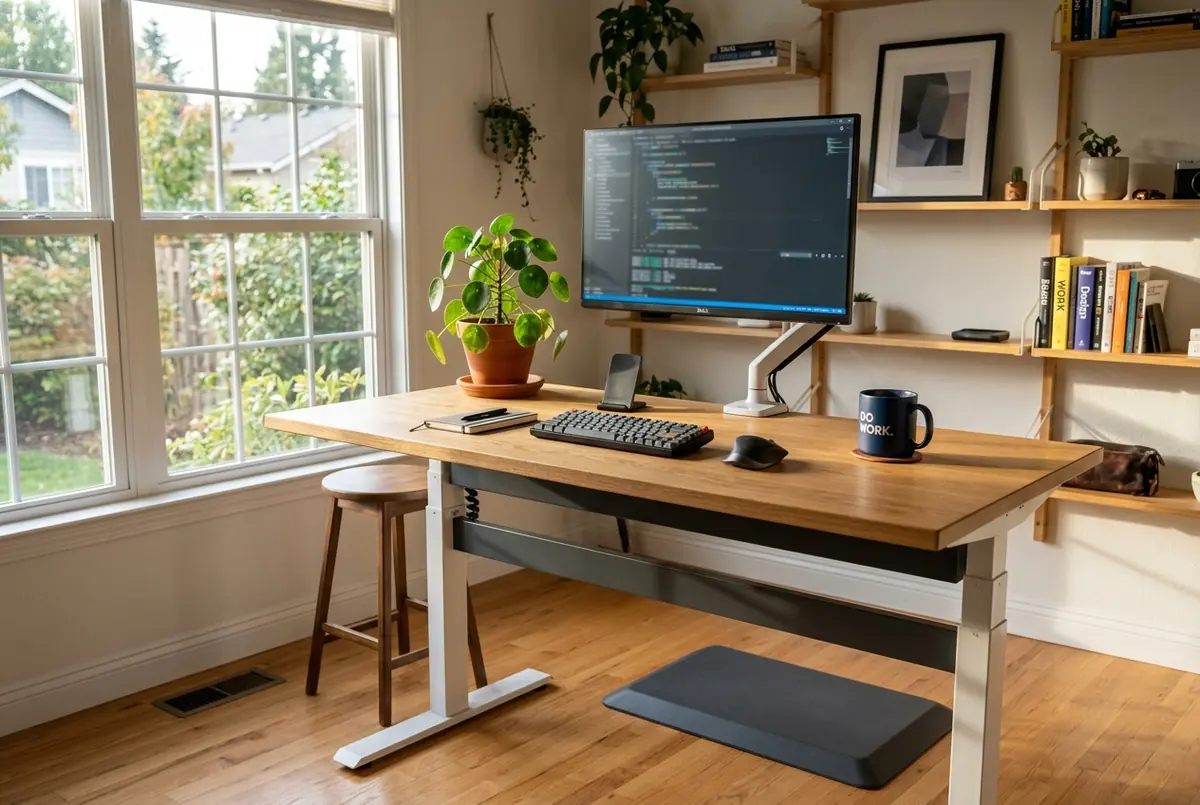
- Alternate on a rhythm that suits you — many land near 30–45 minutes sitting, 15–20 standing, repeated. There's no universal prescription.
- Treat standing blocks as movement invitations: weight shifts, heel raises, a wander during calls. Standing's advantage over sitting is that moving from it is frictionless.
- Stand for the low-focus work — calls, email, reading. Most people do precision work (writing, code, detailed design) better seated.
- Set both heights properly: elbows near right angles, screen top around eye level, in both modes. A badly adjusted standing height just relocates the ache.
- Anti-fatigue mat and decent shoes make standing blocks pleasant instead of penitential.
If you don't have one
No purchase required for the underlying principle: interrupt sitting briefly and often, walk when you can, and let no hour pass entirely motionless. A kitchen counter is a standing desk for reading; a phone call is a walking desk with no desk at all.
The furniture is fine — a good sit-stand desk is a genuinely useful tool. But it's the movement it enables, not the standing it permits, that was ever going to help. The desk doesn't save you. The switching does.