A 5-Minute Desk Stretch Routine You'll Actually Do (No Floor Required)
Six standing or seated moves that counter the exact positions desk work locks you into. No floor, no changing, no colleagues staring.
(Image credit: Wellness Research Daily)
Most desk-stretch routines die on logistics: nobody's getting down on the carpet between meetings, and the one involving a resistance band stayed in the drawer since 2019. This one asks for five minutes, standing or seated, in work clothes, and its ambitions are realistic: counteract the handful of positions desk work locks your body into, once or twice a day. Research on breaking up sitting time consistently shows that even brief movement interruptions improve metabolic markers and reduce musculoskeletal discomfort — which means the bar for "counts" is gratifyingly low.
The routine
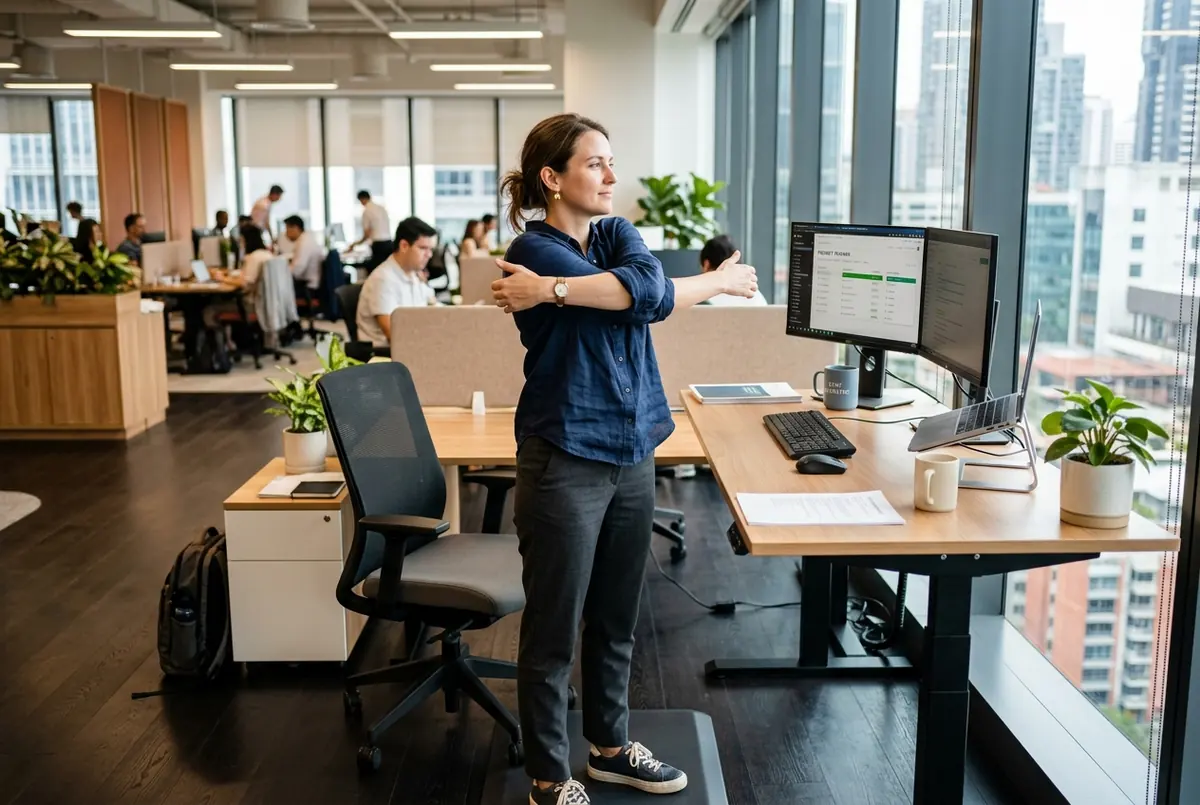
- Stand-and-reach (30 seconds). Stand, reach both arms overhead, stretch tall, then side-bend gently left and right. This single move reverses the compressed slump and feels disproportionately good for the time invested.
- Doorway chest stretch (30 seconds). Forearms braced on a doorframe at shoulder height, step gently through until the front of the chest and shoulders opens. The direct antidote to keyboard-forward shoulder position.
- Chin tucks (30 seconds). Seated or standing, glide your head straight back — making a dignified double chin — hold two seconds, release, repeat. Counters the forward-head screen drift; invisible under any desk.
- Seated spinal twist (30 seconds each side). Sitting tall, rotate to one side using the chair back for a gentle assist. Breathe; don't crank.
- Standing hip-flexor stretch (30 seconds each side). One foot stepped well back, tuck the pelvis slightly and feel the front of the rear hip open — the most chair-specific tightness there is.
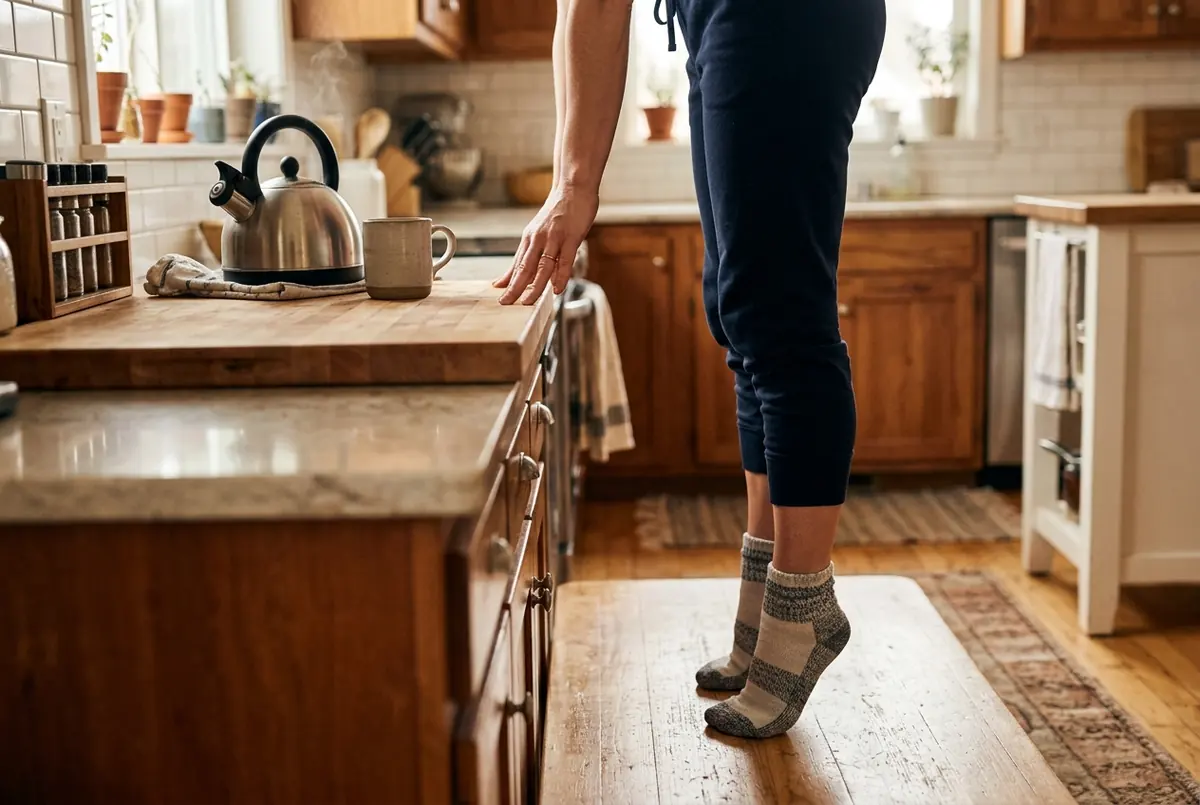
- Calf raises (30 seconds). Fifteen to twenty slow rises at the desk edge. Less a stretch than a circulation pump for legs that have been idle since the last walk — arguably the most valuable half-minute on this list, given the calf muscle pump's role in returning blood from idle lower legs.
Making it stick
Attach it to an anchor that already exists: after lunch, at the 3 p.m. slump it partially cures, between the second and third meetings of the morning. The consistency matters more than perfection — doing four of the six most days beats doing all six once a month. None should hurt; mild stretch is the target, pain is a stop sign, and anything that consistently aggravates belongs with a professional.
Done most days, five minutes won't make you flexible. It'll do something more useful: it'll make the desk cost less.