How Long Does a Habit Really Take? The 66-Day Answer — and Five Habits Worth It
The famous 21-day rule is a myth. A University College London study found habits take about two months to automate — and missing a day doesn't matter. Here's how to invest that time well.
(Image credit: Wellness Research Daily)
Health advice tends to arrive sized XL: overhaul your diet, transform your sleep, commit to the program. Meanwhile the actual difference between feeling decent and feeling rough at year's end is usually built from habits so small they're almost embarrassing to write down. The science of habit formation explains why small wins — and busts the deadline everyone thinks they're racing.
The 66-day finding
The “21 days to form a habit” rule cited everywhere has no research behind it — it traces to a 1960s plastic surgeon's observation about patients adjusting to their new appearance, which pop psychology then laundered into universal law. The actual landmark study, led by Phillippa Lally at University College London and published in 2010, tracked volunteers building real daily habits and measured how long behaviors took to become automatic — done without deliberation, the true definition of habit.
The median answer: 66 days, with enormous individual range — from 18 days for the quickest habit-and-person pairings to a projected 254 for the slowest. Two months, give or take, not three weeks. And the study's most practically useful finding: missing a single day made no meaningful difference to the process. The all-or-nothing anxiety — “I broke the streak, it's ruined” — is simply wrong on the evidence. Habits are built by returning, not by perfection.
The strategic implication: since every habit costs a couple of months of repetition to automate, spend that investment on behaviors small enough to survive bad weeks and valuable enough to compound. Like these.
Five habits with elite effort-to-payoff ratios
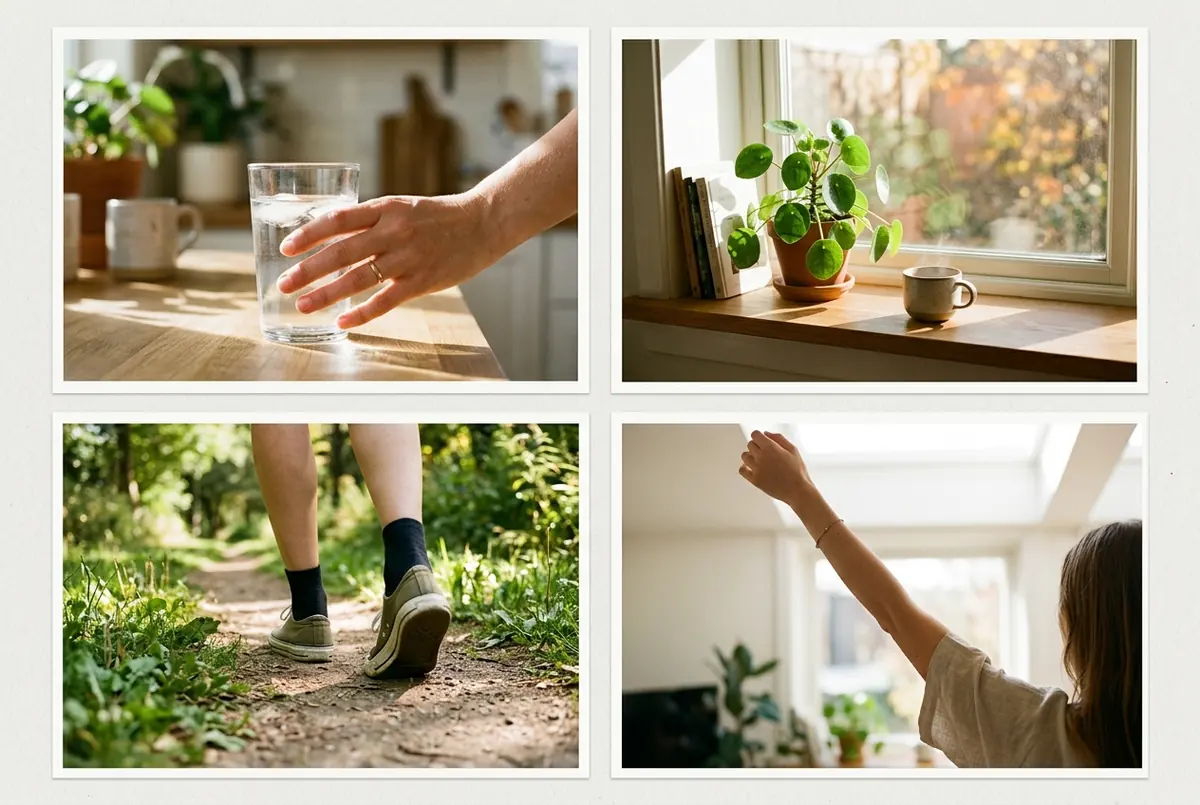
- Water within arm's reach. Not a hydration regime — just a filled bottle wherever you spend time. Proximity does what willpower won't; people drink dramatically more when it's within reach, and mild dehydration's costs (fatigue, headaches, fake hunger) quietly vanish.
- The after-meal stroll. Ten minutes of easy walking after your biggest meal aids digestion and blunts the post-meal slump — movement around meals is exactly where the metabolic research says it counts most. Anchored to lunch, it survives where free-floating exercise plans die.
- Lights down before bed. Bright overheads until the second you sleep tell your body clock it's afternoon. Dimming to lamps in the final hour is a one-switch habit; most people feel the difference inside a week.
- A daily dose of outside. Outdoor light delivers ten to a hundred times the lux of indoor lighting, and morning doses anchor the circadian clock that runs your energy and sleep. Five to fifteen minutes; coffee on the step counts.
- The two-minute response rule. Feel stiff, notice it, and do something about it for two minutes right then — stretch tall, walk the hallway, heel raises at the counter. The habit isn't any particular exercise; it's answering the body's signal at all instead of overriding it for six hours.
Making them stick, per the research
Habit science's other robust findings are mercifully practical. Anchor the new behavior to an existing cue — after I pour coffee, I fill the water bottle — because context, not motivation, is what triggers automatic behavior. Keep the version small enough that a terrible day can't defeat it. Expect the two-month timeline and don't interpret week three's effort as failure. And when you miss a day — you will — the study's answer is the kindest one in behavioral science: it doesn't matter. Come back tomorrow.
None of this trends. All of it compounds — the same way the big failures do, just in the other direction.