Sleep Tracking: Helpful Tool or New Anxiety? A Clinical Term Explains the Dark Side
In 2017, sleep clinicians named a new condition: orthosomnia — anxiety about imperfect tracker scores that itself ruins sleep. The case for wearing data lightly.
(Image credit: Wellness Research Daily)
Sleep used to be the one part of life without a dashboard. No longer: rings, watches, bands, and bedside sensors issue nightly report cards, and “what's your sleep score?” has become normal conversation. The honest answer to whether tracking helps is: depends entirely on the user — and clinicians coined a word for the way it goes wrong.
What trackers do well
Consumer devices are reasonably good at the big picture: when you went to bed, roughly when you fell asleep, total duration, and consistency across weeks. That macro view has genuine value. Many users didn't know they were averaging five and a half hours until a tracker showed them the trend. As a behavioral mirror — making the connection between late caffeine and a visibly rougher night, or between weekend lie-ins and Monday grogginess — the data can motivate exactly the boring fundamentals that improve sleep.
What they do less well
The granular claims — precise sleep-stage breakdown, restfulness scores, readiness numbers — rest on wrist-level estimation that sleep researchers regard as rough. Polysomnography (the gold-standard lab test) uses EEG, EMG, and EOG sensors directly on the head and face; a wrist accelerometer with a heart-rate sensor is guessing, and the guesses for individual stage totals on any single night are approximate. Treating decimal-point scores as ground truth gives the numbers more authority than they've earned.
Orthosomnia: the clinical concern
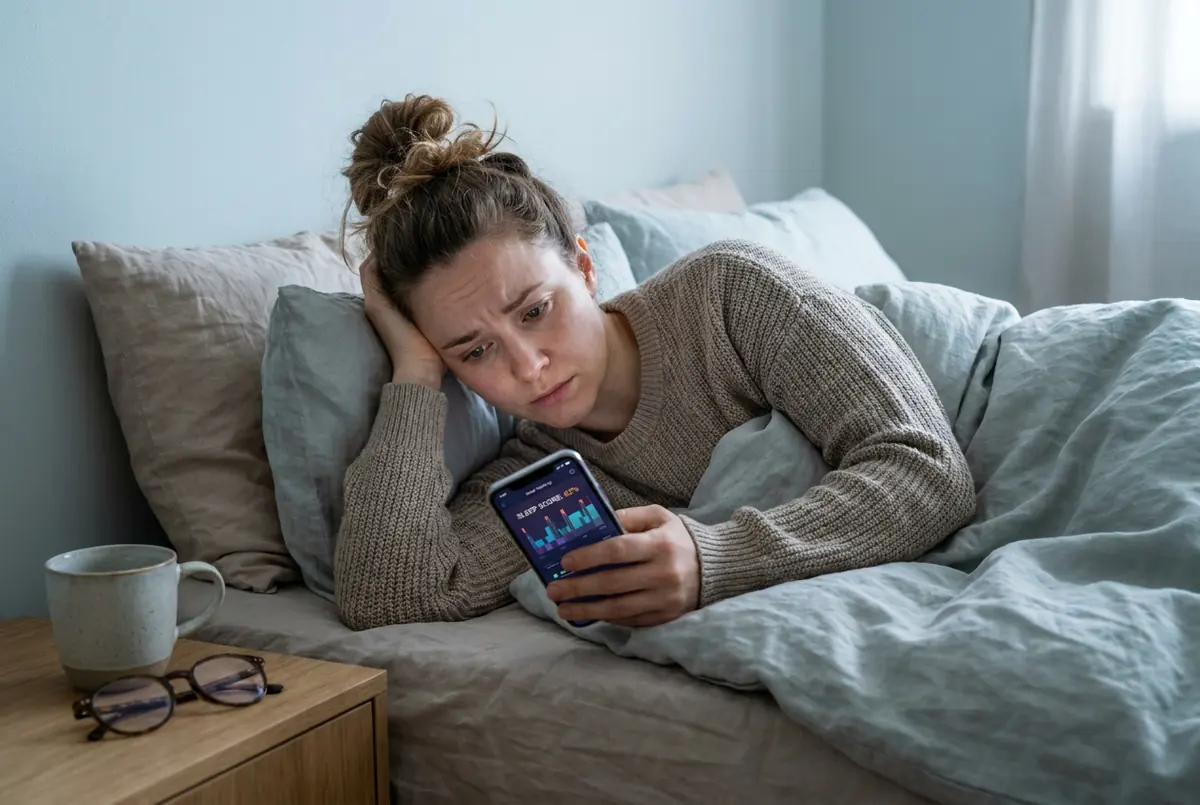
In 2017, sleep medicine researchers Kelly Glazer Baron, Sabra Abbott, and colleagues published a paper in the Journal of Clinical Sleep Medicine introducing the term orthosomnia — a preoccupation with achieving perfect sleep data that itself disrupts sleep. They described patients sleeping adequately by objective measures but presenting with anxiety, frustration, and insomnia driven by imperfect tracker grades.
The irony is structural: anxiety is among sleep's worst enemies, and a nightly graded exam can manufacture it. When the score outranks how you actually feel — you feel fine, but the ring says you failed — the tool has become the problem. Clinicians have since reported it frequently enough that the term appears in sleep-medicine training.
A sane way to track
- Watch trends over weeks, not single-night stages. The multi-week pattern is where trackers are reliable and useful.
- Use the data to adjust behaviors, then let it recede. The tracker's job is to show you that caffeine at 5 p.m. costs an hour; once you've learned that, the data point is redundant.
- Calibrate against how you feel. You are the ground truth, not the app. A score that consistently contradicts your lived experience is wrong, not you.
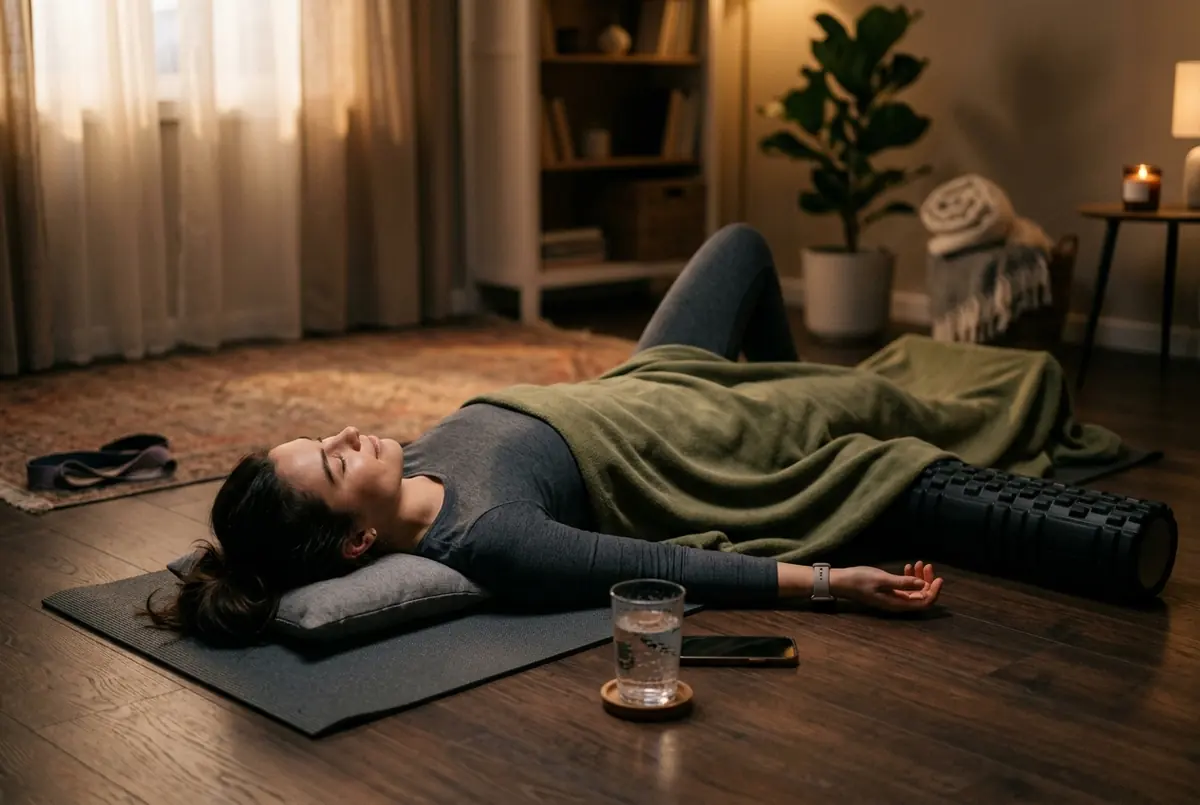
- Take a tracking holiday if checking the score causes dread. Sleep predates the dashboard by several million years and works unsupervised.
Measured lightly, a sleep tracker is a useful mirror. Gripped tightly, it's a stressor with a subscription fee. The research on how to sleep well doesn't mention looking at your wrist first thing in the morning — and that's probably the most useful data point of all.