Mobility vs. Flexibility: What's the Difference and Which Do You Need?
They're used interchangeably and they shouldn't be. The distinction changes what you should actually do with your ten spare minutes.
(Image credit: Wellness Research Daily)
Fitness vocabulary blurred these two into synonyms, but the distinction is practical, not pedantic — and it changes whether you spend your limited maintenance time on passive stretching or active movement drills.
The definitions
Flexibility is passive range of motion: how far a joint can go when something else — gravity, a strap, a partner, a yoga instructor — takes it there. Touching your toes with straight legs is a flexibility demonstration; the hamstrings are being lengthened, but you're not actively controlling the end position.
Mobility is active, controlled range of motion: how far you can take a joint under your own muscular power, with the strength to own the position throughout. Sitting into a deep squat, reaching overhead without your back arching to compensate, rotating your torso to check a blind spot — that's mobility. It's flexibility plus control plus strength through the range.
Why the difference matters in real life
Daily life and sport almost never ask for passive flexibility; they ask for controlled range. Reaching a high shelf, getting up from the floor, carrying a toddler — all demand range you can actively produce and stabilize. Range you can't control isn't just less useful; strength-and-conditioning coaches will tell you it's where tweaks tend to happen — the muscle is long enough, but nothing is holding the fort at the end.
This is why modern practice has drifted from long-hold static stretching toward active drills: moving joints deliberately through their range under control, rather than hanging out passively at the end of it.
What most desk-bound adults actually need
Not more passive flexibility — most sedentary stiffness isn't about muscles that are genuinely short. It's about ranges that went unused so long the nervous system stopped maintaining access. The high-value mobility targets for desk workers are predictable:
- Hips that extend — sitting's primary casualty; the hip flexors get short and the glutes go quiet
- Upper back that rotates and extends — the screen hunch steals both
- Ankles that bend — relevant to squatting, stairs, and balance
- Shoulders that reach overhead cleanly — without the lower back bowing out to compensate
A minimal practice
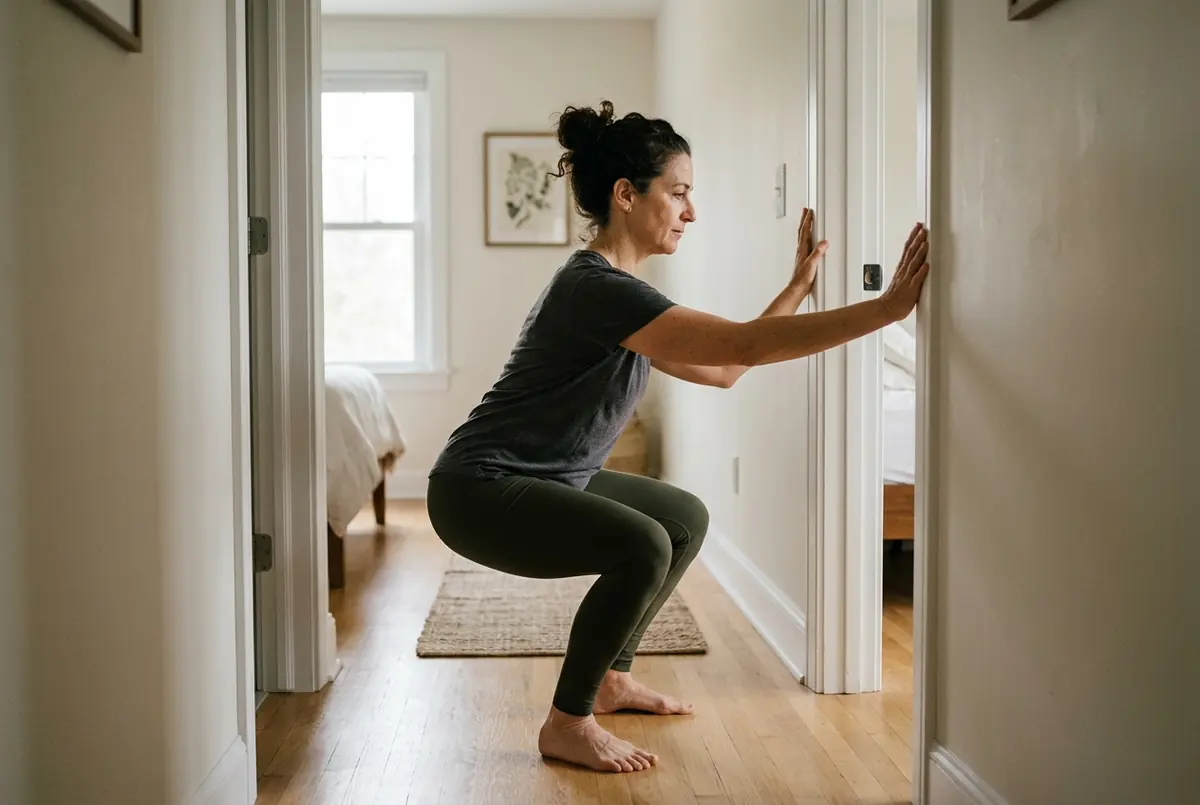
Five to ten minutes, most days: slow hip circles and lunges with a reach, cat-cow and thoracic rotations, deep squat holds using a doorframe for balance, wall slides for the shoulders, ankle rocks. Move slowly, breathe, and treat end-ranges as places to visit with control rather than crash into.
Static stretching still has a place — it feels good, and it helps where a muscle is genuinely short. But if you have ten minutes and must choose, spend them on range you control. That's the range you'll get to use.