Why Hobbies Are Wellness, Not a Luxury — According to a 16-Country Study
Research across tens of thousands of older adults linked hobby engagement with less depression and higher life satisfaction. The case for taking your pastimes seriously.
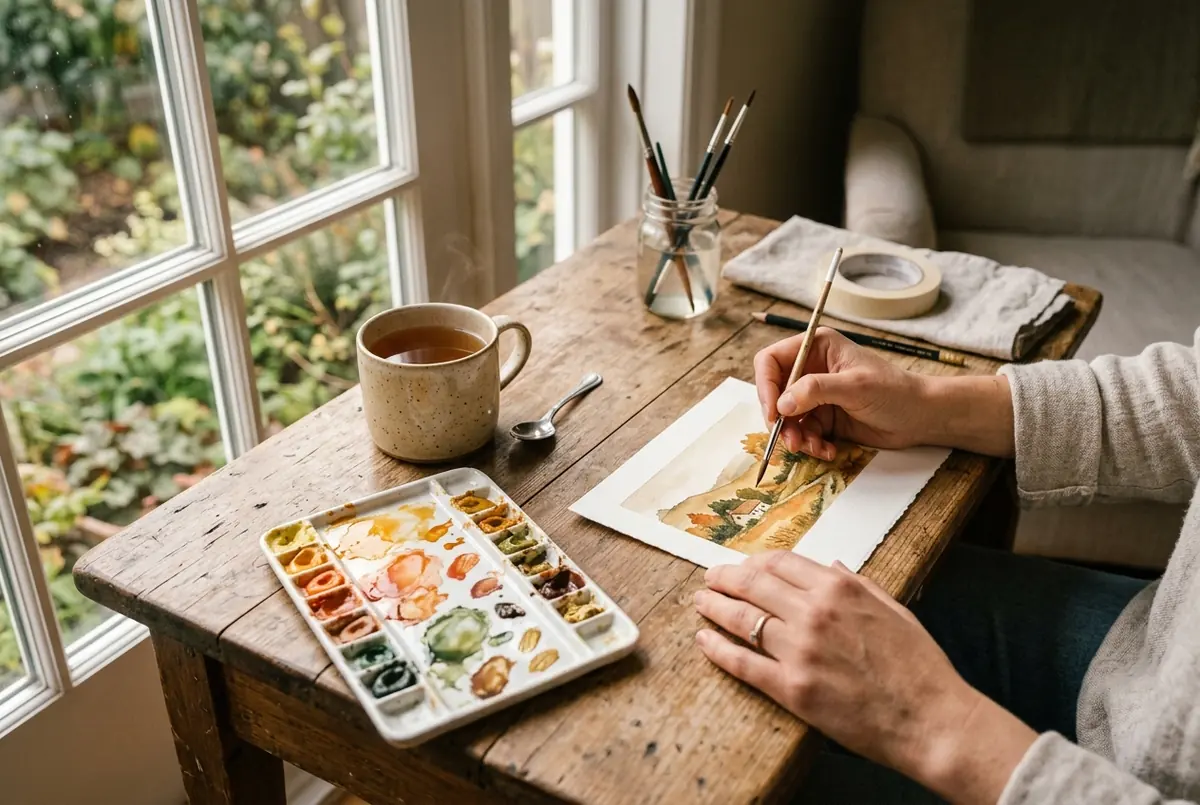
(Image credit: Wellness Research Daily)
Somewhere along the way, hobbies got reclassified as indulgences — the thing you'll get back to when life calms down. It's a costly miscategorization, and the research now says so directly.
What the science found
A landmark study published in Nature Medicine in 2023 examined hobby engagement among more than ninety thousand older adults across sixteen countries, drawing on five long-running aging studies. The pattern was consistent across borders and cultures: people who engaged in hobbies showed fewer depressive symptoms and higher levels of happiness, self-reported health, and life satisfaction than those who didn't — associations that held after accounting for a battery of other factors. The researchers were appropriately careful about cause and effect, as observational science must be, but the direction, size, and cross-cultural consistency of the link made their conclusion notable: hobby engagement looks like a genuine ingredient of mental wellbeing, not a decoration on it.
It's one study among a broader literature pointing the same way — leisure engagement keeps turning up alongside better mood, lower stress markers, and healthier aging. The interesting question is why.
What a hobby does that rest doesn't
Scrolling and streaming are rest, of a sort, but they're passive — attention drifts, often toward feeds engineered to agitate it. A hobby is active absorption: hands or mind engaged in something with its own small goals, textures, and progress. That absorbed state — psychologists' “flow,” the hour that disappears — is restorative in a way passive rest rarely matches. People emerge from it rested and satisfied, which is a different feeling from merely having stopped working.
Hobbies also carry quieter payloads: many involve gentle movement (gardening, woodworking, dancing), many involve other people (clubs, classes, choirs — and social connection has its own formidable health literature), and nearly all involve small, repeated experiences of competence. Each is independently good for you; a hobby bundles them.
The identity dividend
Work and caregiving can quietly swallow the whole self. A hobby maintains a corner of identity that isn't a role — you're also a person who grows tomatoes, plays passable guitar, paints middling watercolors. That corner matters most exactly when the roles get stressful: it's somewhere to stand that the stress can't reach, a part of the week that belongs entirely to you.
Permission for mediocrity
The modern trap is turning every interest into a hustle or a metric — the side gig, the follower count, the improvement plan. The wellness value of a hobby lives precisely in its uselessness: no audience, no monetization, no progression required. Being contentedly mediocre at something you love is not a failure state; it's the whole point, and strangely hard to allow yourself.
Starting smaller than feels respectable
If it's been years, don't design a program. Buy the cheap version of the equipment, commit to twenty minutes, and protect that slot like a meeting — because it is one, with yourself. The research suggests what practitioners already knew: life doesn't calm down on its own. The hobby is one of the proven ways you calm it.