Cold Plunges: What the Science Gets Right, What's Oversold, and the Safety Rules That Aren't Optional
The mood boost is real. The metabolic claims are ahead of the evidence. And the safety paragraph isn't optional. A level-headed hype check.
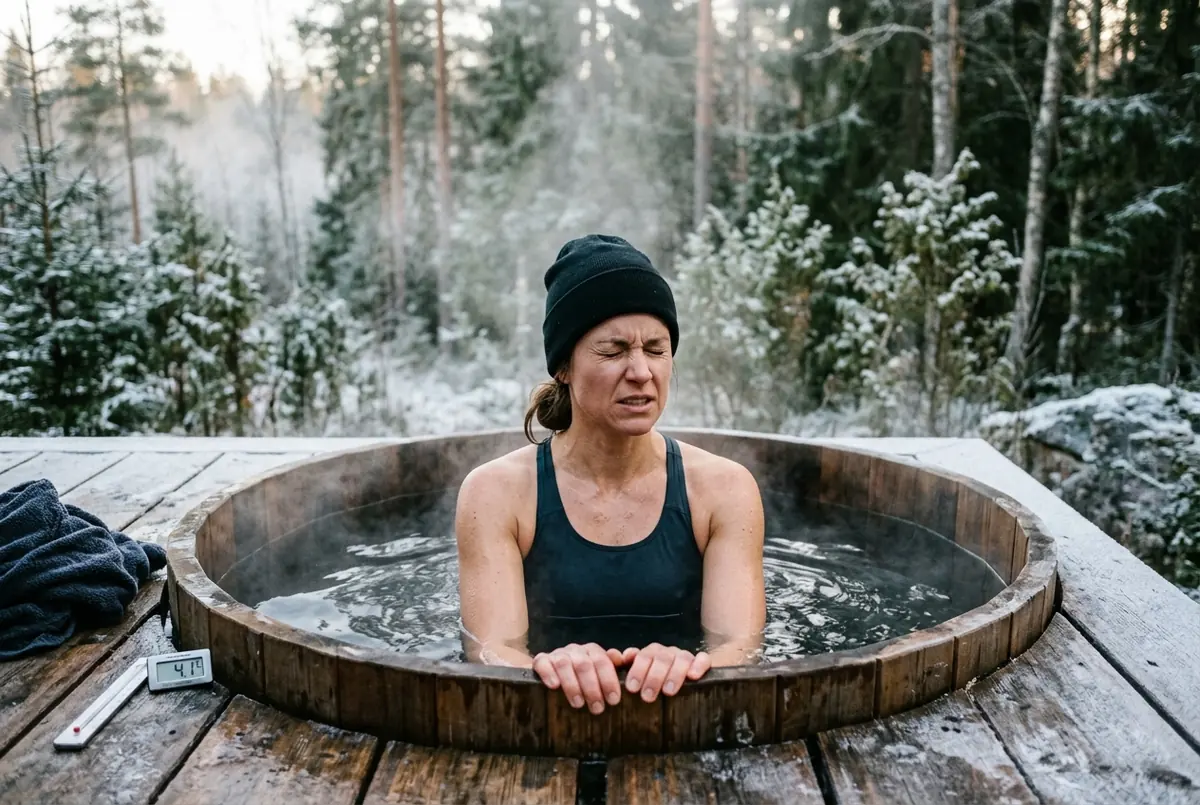
(Image credit: Wellness Research Daily)
Few wellness trends have scaled like deliberate cold exposure: cold showers, winter-swim clubs, and the backyard plunge tub as the new hot tub. The claims run from mood transformation to metabolic magic to immune fortification. The evidence is more selective — some of it holds up, some of it is vibes in an ice jacket, and the safety dimension is real enough to lead with.
What holds up well: mood and alertness
The most consistently reported and best-supported benefit is the acute mood and alertness response. Cold-water immersion triggers a sharp spike in norepinephrine — research associated with Dr. Susanna Søberg and discussions popularized by Andrew Huberman cite increases of roughly 200–530 percent within minutes — producing a state that plungers describe as alert, invigorated, and mildly euphoric for hours afterward. This effect is real, reproducible, and is honestly what most regular practitioners are chasing.
Søberg's work has also explored the role of deliberate cold in activating brown adipose tissue (metabolically active fat that generates heat), suggesting that roughly 11 minutes per week of cold exposure across two to three sessions may be a practical threshold — a modest protocol that the backyard plunge delivers easily.
What holds up reasonably: soreness reduction
A 2024 systematic review by Moore and colleagues in the British Journal of Sports Medicine found that cold-water immersion at 10–15°C reduced delayed-onset muscle soreness by 20–39 percent. Athletes have used ice baths for recovery for decades, and the evidence supports the practice for soreness — if not for every other claim attached to it.
What's oversold
The metabolic weight-loss claims — meaningful fat loss through brown-fat activation — remain far ahead of the evidence at practical doses. Nobody is plunging their way lean. Immune claims rest on thin and inconsistent research. And the longevity framing — cold as a lifespan intervention — is speculative at best.
One nuance matters for gym-goers: cold immersion immediately after resistance training appears to blunt some of the hypertrophy (muscle-building) adaptation, likely by suppressing the inflammatory signaling that strength adaptation requires. Research suggests a gap of four to six hours between lifting and cold largely preserves gains, while endurance adaptations appear unaffected. Lifters should separate cold from iron, not stack them.
The safety section — read this part
Cold-water immersion is a genuine cardiovascular stressor. The initial cold-shock response triggers involuntary gasping, hyperventilation, and a sharp blood-pressure spike — which is exactly why unsupervised solo plunges in open water cause tragedies every year. Rules that aren't negotiable:
- Never plunge alone in open water. Period.
- Enter gradually. Walk in or lower yourself; jumping in maximizes the shock response.
- Start short. A minute or two is plenty for beginners; the norepinephrine response doesn't require heroic durations.
- Anyone with cardiovascular conditions, uncontrolled blood pressure, Raynaud's, or pregnancy should get medical clearance first. Full stop.
- Get out at numbness or uncontrollable shivering. Colder and longer is not better — it's just colder and longer.
The verdict
As a mood tool and an alertness ritual, cold exposure earns its enthusiasm — and it's available cheaply, since a cold shower delivers most of the norepinephrine experience without a tub. As soreness management for athletes, the evidence supports it. As a weight-loss method, immune booster, or longevity hack: the claims have outpaced the data.
Carry accurate expectations, respect the safety rules, and the practice is a genuinely useful addition to the toolkit. Just don't mistake the dopamine hit for a medical intervention.