Salt, Water Retention, and Puffy Ankles: The Numbers Behind the Connection
The average American eats nearly 50 percent more sodium than guidelines recommend. Here's where it hides, what it does to your ankles, and what brings them back.

(Image credit: Wellness Research Daily)
It's a familiar sequence: takeaway and crisps on Friday night, tight rings and deeper sock marks on Saturday morning. The link between salty days and puffy days isn't imagination — it's your body's sodium-regulation system doing exactly what it's designed to do, and the numbers at play are worth knowing.
The mechanism
Your body maintains sodium concentration in a narrow band. Eat a large sodium load and the simplest correction is to retain more water to dilute it — thirst rises, kidneys slow their sodium excretion temporarily, and the extra fluid parks in your tissues until the sodium is gradually cleared. Where does the retained water show? Wherever gravity and loose tissue invite it: fingers, face, and above all ankles and lower legs, especially after hours of standing or sitting.
How much sodium and from where
The FDA and the Dietary Guidelines for Americans recommend less than 2,300 milligrams of sodium per day — roughly one teaspoon of table salt — for people aged 14 and older. The American Heart Association goes further, recommending an ideal limit of no more than 1,500 mg/day for most adults, particularly those with or at risk for hypertension.
The average American intake? Approximately 3,400 mg/day — nearly 50 percent above the federal guideline and more than double the AHA ideal. And the shaker on the table is a minor character: the large majority of dietary sodium — the FDA estimates more than 70 percent — arrives pre-installed in processed, packaged, and restaurant food. Bread, cheese, cured meats, sauces, soups, canned goods, and takeaways are the real sources, which is why a day can be very salty without anything tasting particularly salty.
Easing a puffy day
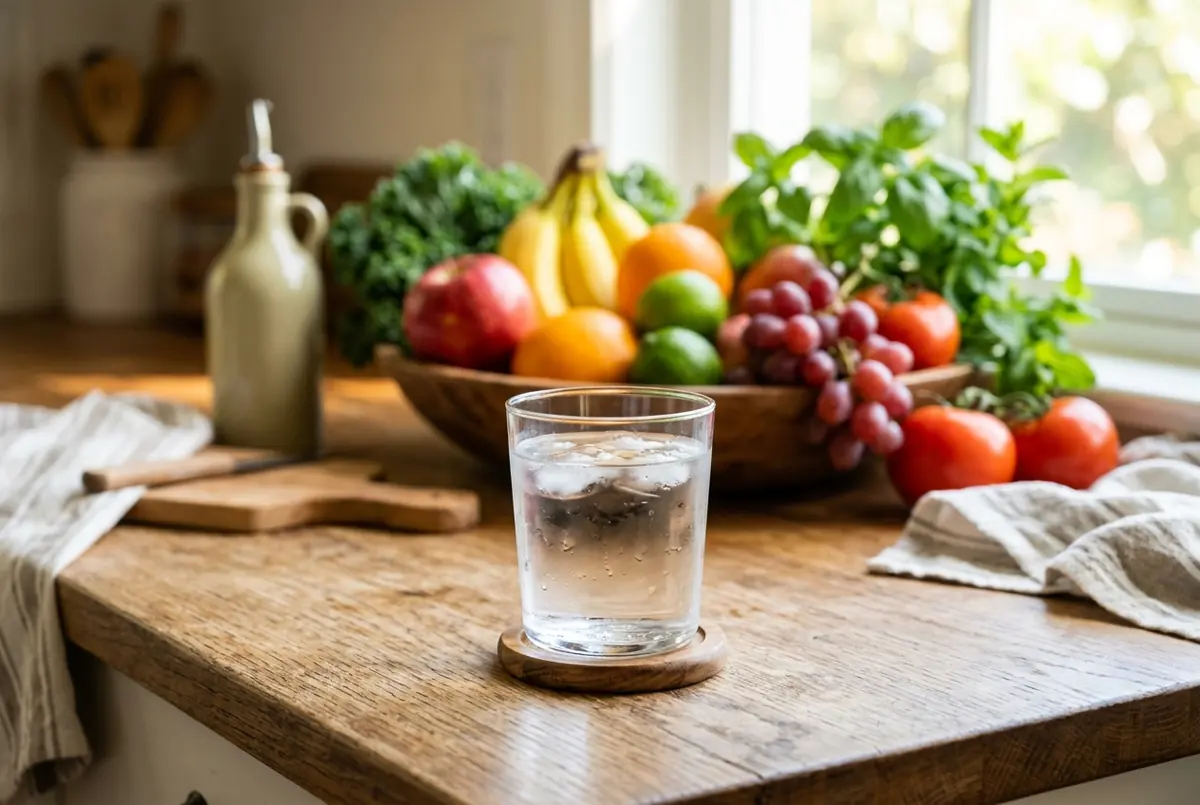
- Drink normally or a bit more. Counterintuitively, water helps flush excess sodium; restricting fluid makes the body hold on harder.
- Move the calves. Walking and calf exercises push pooled fluid out of the lower legs via the muscle pump. The pump only works when the muscles work.
- Elevate in the evening. Gravity refunds generously — ten minutes with feet above heart level lets fluid drain back toward the core.
- Potassium from food. Potassium works opposite to sodium in fluid balance, and adequate intake helps the kidneys clear sodium faster. Bananas, potatoes, beans, yogurt, leafy greens, and citrus are reliable sources.
- Light compression on long sitting or standing days. Graduated compression socks support return flow and keep fluid from pooling in the first place — the mechanical answer to the same gravitational problem sodium exploits.
Perspective, and the caveat
Occasional salt-driven puffiness is benign and self-resolving — a day or two of normal eating rebalances it. But the chronic version of the sodium story is a blood-pressure story, and that's a different scale of consequence. Persistently high sodium intake is one of the leading dietary contributors to hypertension, which the AHA calls the most significant modifiable risk factor for heart disease.
And one-sided swelling, swelling with pain, or puffiness that doesn't resolve overnight are always medical questions, not menu questions. For the everyday, both-ankles, salty-weekend version: hydrate, move, elevate, and let the kidneys do what they do best — which they will, given a day or two and some potassium.