The Best Anti-Fatigue Mats — and Whether You Need One at All
They've spread from factory floors to standing desks everywhere. We tested the mats that dominate the category to find out what a slab of foam can really do.
(Image credit: Wellness Research Daily)
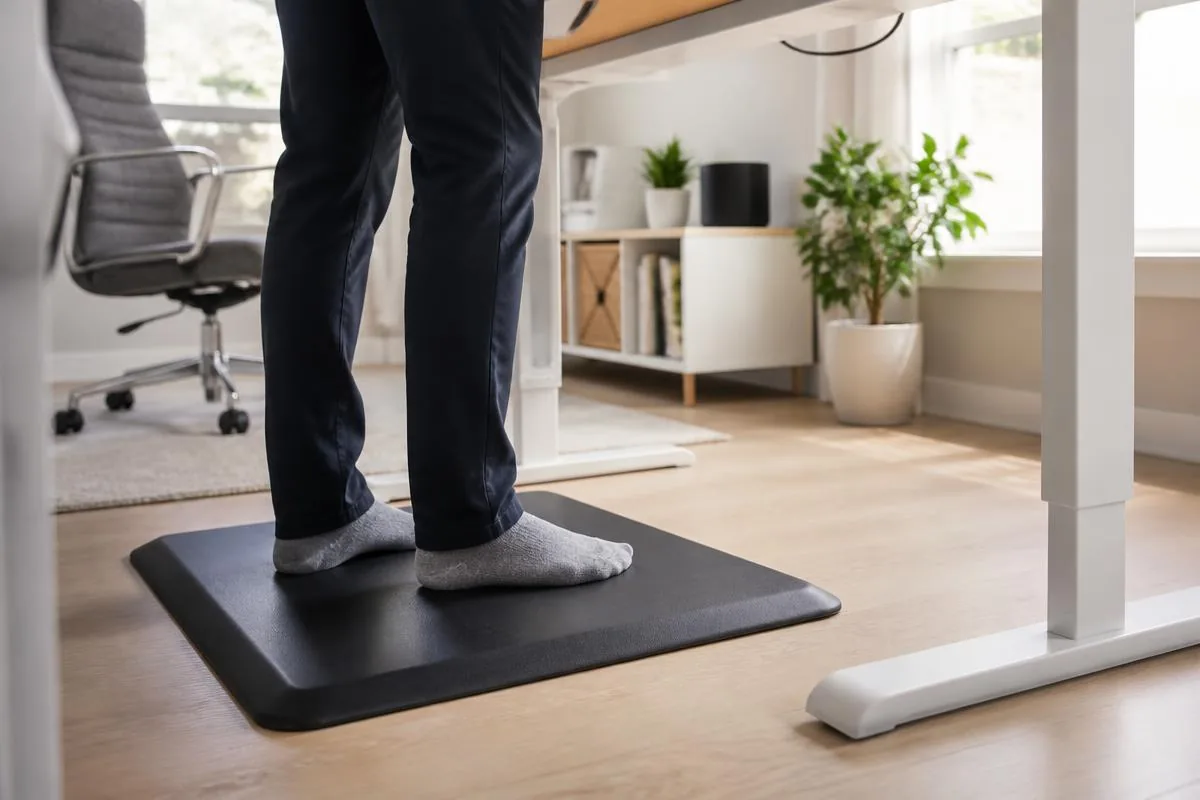
The pitch is simple: stand on something softer than the floor and your body will thank you. Like most simple pitches, it's partly true — and the true part is more interesting than the marketing suggests.
Occupational health bodies like the Canadian Centre for Occupational Health and Safety have long recommended anti-fatigue matting for prolonged standing work, alongside supportive footwear and frequent posture changes. The mechanism isn't softness for its own sake: a good mat is slightly unstable on purpose, which triggers constant micro-movements — tiny weight shifts you don't notice — that keep leg muscles gently cycling and blood moving instead of statically pooling. Here's what we'd actually buy.
1. Ergodriven Topo — the standing-desk specialist (~$109)
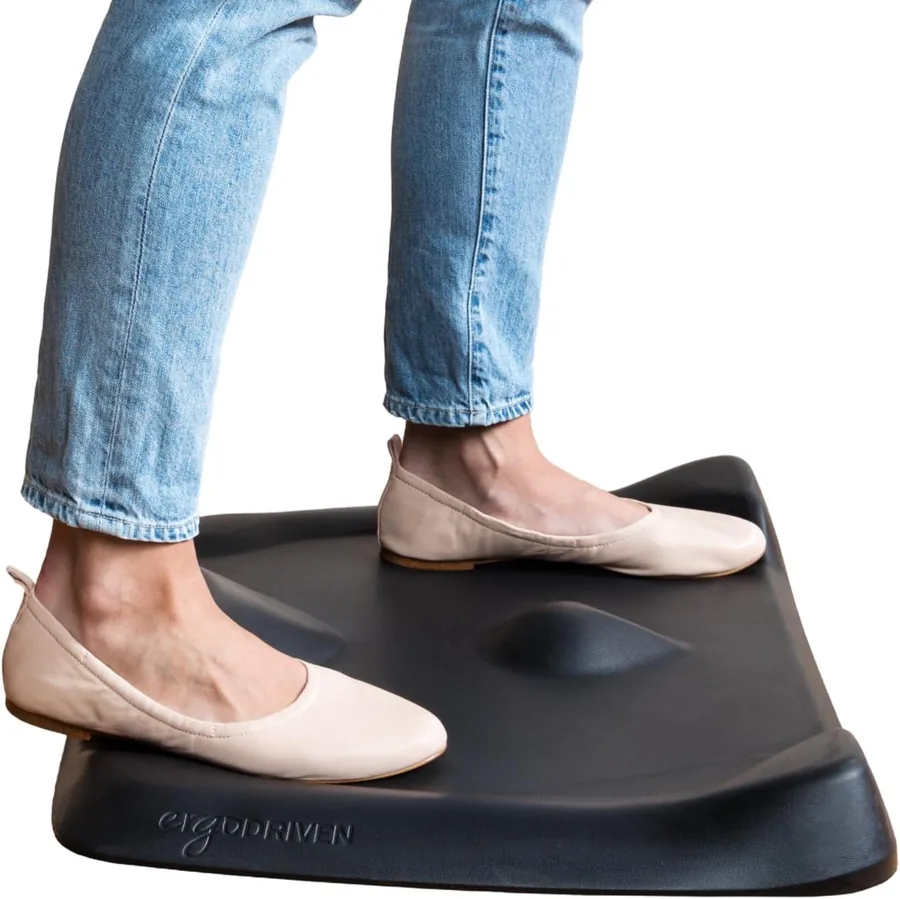
The Topo rethinks the category: instead of a flat slab, it's a molded polyurethane landscape of ridges, mounds, and a raised back bar that actively invites your feet to wander — press a calf stretch here, perch a foot there. It's been Wirecutter's standing-desk mat pick for the better part of a decade, the movement-provoking design genuinely works (you fidget more, in the good way), and Ergodriven backs it with a warranty measured in decades. The catch is the price and that it's built for barefoot-or-socks desk work more than shoes-on kitchen duty. There's a Mini for smaller spaces.
2. ComfiLife Anti-Fatigue Mat — the budget benchmark (~$40)
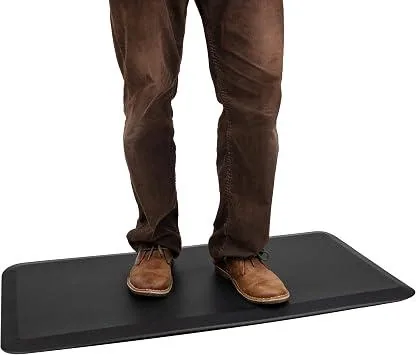
The ComfiLife is the classic flat mat done properly: three-quarter-inch high-density foam that compresses and pushes back rather than bottoming out, a genuinely non-slip base, beveled edges, a stain-resistant surface, and a lifetime warranty — for the price of a nice lunch for two. It's a Wirecutter budget pick and an Amazon fixture with a review count in the tens of thousands. For kitchens, workbenches, and anyone who wants one mat for shoes and socks alike, this is the sensible default.
3. Sky Solutions Anti-Fatigue Mat — the size-and-color aisle (~$40)
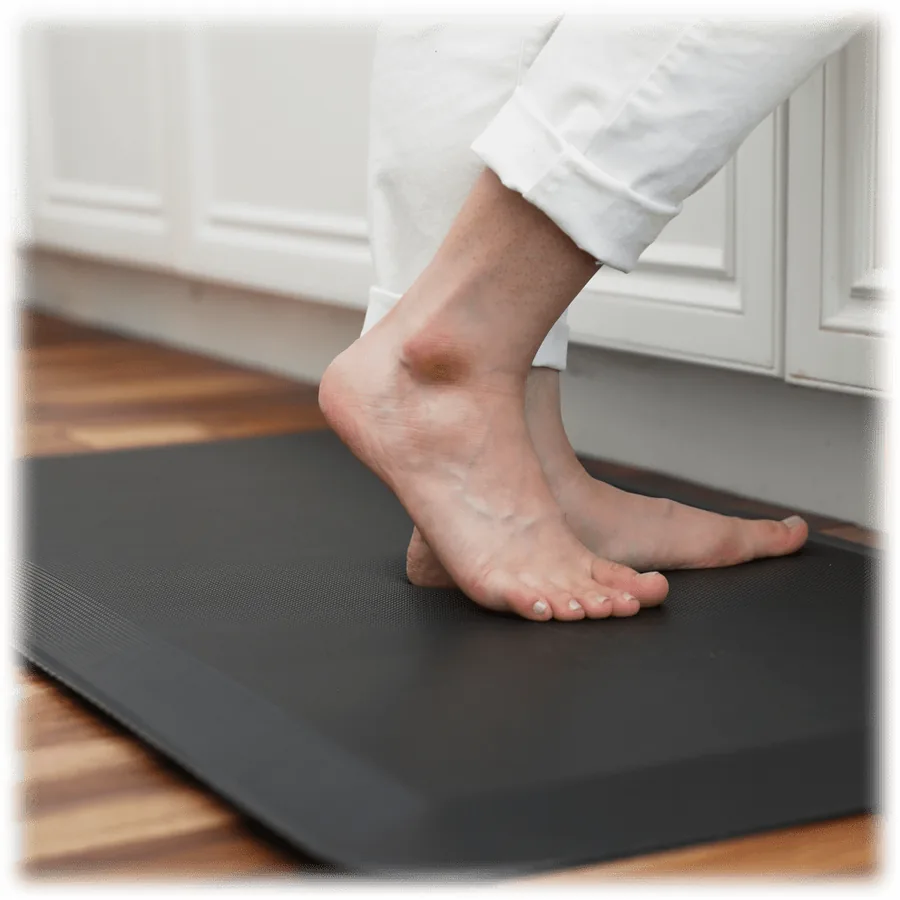
Functionally similar to the ComfiLife — dense supportive foam, anti-curl beveled edges, non-slip backing — the Sky Solutions mat wins on selection: a wide range of sizes up to long kitchen-runner formats and enough colors and patterns to match a room rather than fight it. Tech and home publications regularly slot it as the value pick. If the mat will live somewhere visible, start here.
4. Imprint CumulusPRO — the commercial-grade flat mat (~$100)
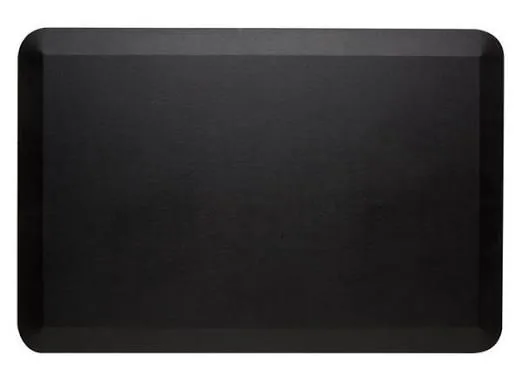
When a mat will be stood on for genuinely heavy hours, the CumulusPRO is the flat-mat upgrade: a dense, single-piece three-quarter-inch polyurethane slab in a generous 24-by-36-inch format, certified for commercial use and noticeably more supportive underfoot than budget foam. It's the one we'd put at a workstation that runs all day, every day.
What to look for in any mat
- Thickness around 2 cm. Enough give to trigger micro-movement; not so much that you sink and wobble. Very thick, very soft mats feel luxurious and work worse.
- Density that pushes back. Press a thumb in — it should compress and recover, not swallow.
- Beveled, anti-curl edges. You'll step half-on, half-off hundreds of times; edges are the difference between a mat and a trip hazard.
- The right surface for the setting. Wipeable for kitchens; fabric-feel or contoured for sock-footed desk work.
What a mat won't do
It won't rescue bad shoes — that's an upgrade to the wrong layer. It won't replace movement; a mat reduces the cost of standing still, but breaks and short walks remain the actual medicine. And it can't help mobile standing work: you can't carry a mat around a hospital ward or a shop floor. For fixed-position standing — a desk, a till, a counter — it's one of the cheapest meaningful upgrades there is. For standing that moves, put the money in footwear and leg support instead.
The bottom line
The Topo for a standing desk, the ComfiLife or Sky Solutions for everywhere else, the CumulusPRO for all-day commercial duty. Modest money, real mechanism, decade-plus lifespan — as comfort purchases go, the boring slab acquits itself remarkably well.