Sleep Hygiene: The 5 Habits That Actually Move the Needle, Ranked by Evidence
Forget the 40-item checklists. Sleep researchers keep pointing at the same short list. Here it is, in order of leverage — with the science for each.
(Image credit: Wellness Research Daily)
Sleep advice has become an industry, and industries produce inventory: mouth tape, sunset lamps, weighted blankets, forty-step wind-down protocols. Underneath the merchandise, sleep researchers keep pointing at the same fundamentals. Here they are, roughly ranked by how much leverage each one offers.
1. A consistent wake time — the unglamorous king
The single most influential habit in sleep hygiene is also the least exciting: waking at roughly the same time every day — weekends included, within about an hour. Your circadian clock uses the wake signal (light, alarm, movement) as its daily anchor; every other rhythm — when you get sleepy, when your body temperature dips, when melatonin rises — organizes downstream from that anchor. Erratic wake times give your system permanent mild jet lag without the travel. Sleep Foundation guidance and circadian researchers agree: this is the foundation.
2. Morning light, evening dimness
Light is the clock's primary input. Bright outdoor light soon after waking — even briefly — sets the day's circadian rhythm; dim, warm lighting in the final hour signals the system that night is coming. The mismatch modern life creates is instructive: dim office mornings (100–500 lux indoors) followed by bright-screened evenings tell the clock a story that ends with lying awake at midnight. The prescription is simple: get outside early, dim the house late.
3. Caffeine with a curfew
A clinical study by Drake et al. (2013, Journal of Clinical Sleep Medicine) demonstrated that 400 mg of caffeine — roughly two to three cups — taken even six hours before bed reduced total sleep time by more than an hour, measured objectively. Caffeine's half-life of five to six hours means a 4 p.m. cup is half-present at 10 p.m. An early-afternoon cutoff — roughly eight hours before bed — is the standard guidance, adjusted for personal sensitivity.
4. A cool, dark, quiet room
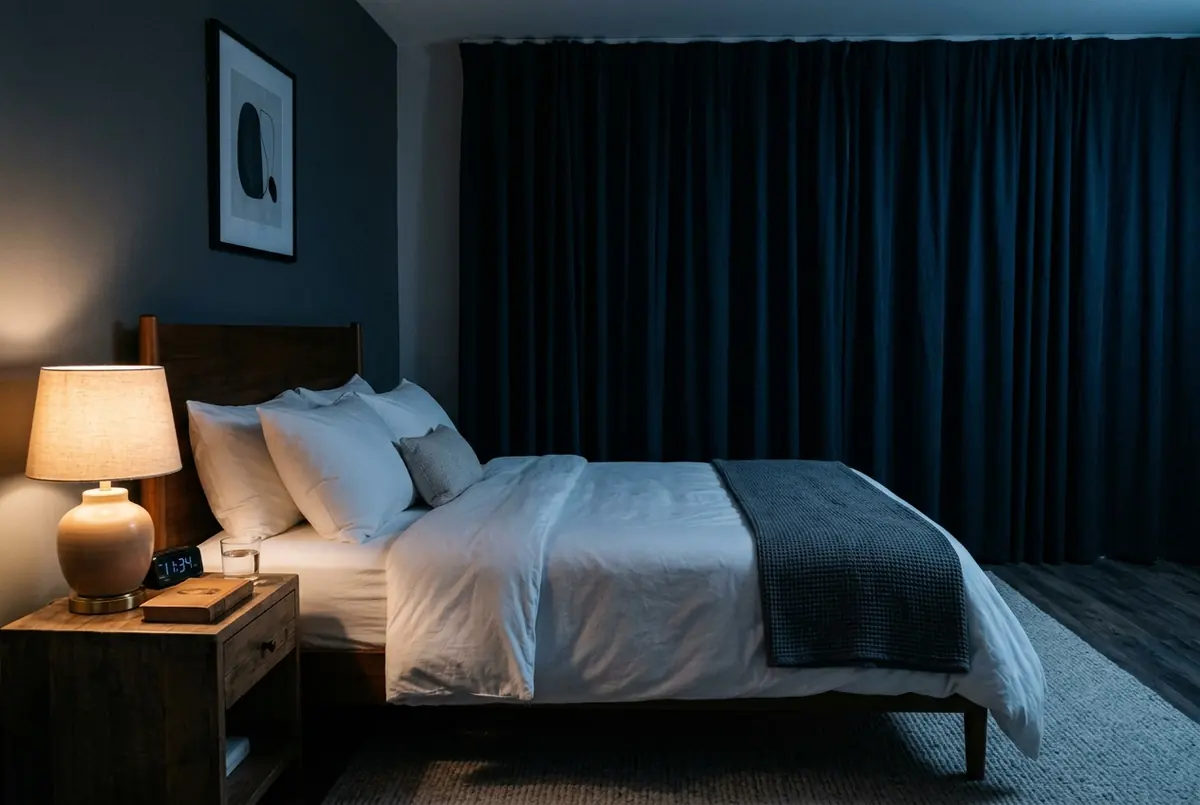
The body needs to drop its core temperature to initiate and maintain sleep. The Sleep Foundation recommends a bedroom temperature of about 65°F (18.3°C), with most guidance falling in the 65–68°F (18–20°C) range. Darkness matters more than most people credit — even small light leaks from standby LEDs and streetlights suppress melatonin. An eye mask is the cheapest fix; decent curtains are the next. Noise is personal; for many, consistency of sound (a fan, white noise) beats silence.
5. A wind-down buffer
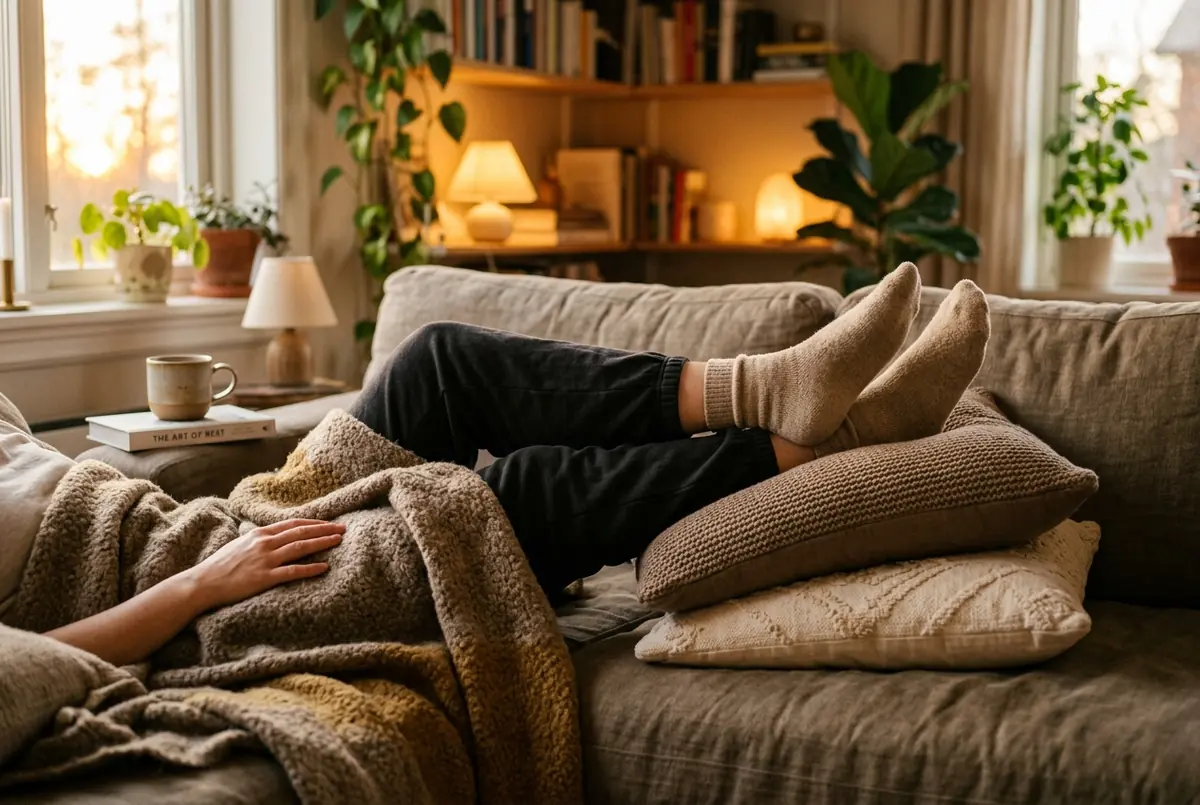
Sleep rarely follows a hard stop from screens, work, or stressful conversations. Thirty to sixty minutes of deliberately dim, pleasant, low-stimulation activity — reading, stretching, unhurried tidying — gives the system its off-ramp. The routine itself becomes a conditioned cue after a few weeks: the sequence triggers sleepiness the way a familiar commute triggers zoning out.
What not to do
Lying awake grinding is counterproductive: after roughly twenty sleepless minutes, standard guidance says get up, keep lights low, do something dull, and return when drowsy. The association between bed and wakefulness is the thing to avoid building.
When fundamentals aren't enough
If sleep stays broken for weeks despite honest implementation — or if snoring, gasping, choking sounds, or crushing daytime sleepiness are in the picture — that's a clinical conversation. Persistent insomnia is treatable with cognitive behavioral therapy for insomnia (CBT-I), the first-line recommended treatment. Obstructive sleep apnea affects a significant share of the population and responds well to treatment. Neither condition improves by trying harder at the list above — and neither should be left to settle on its own.
Master the five fundamentals before buying anything. They're free, they're backed by the weight of sleep medicine, and they are most of the game.